
For international intended parents pursuing surrogacy in the United States, the legal landscape changed quickly in August and September.
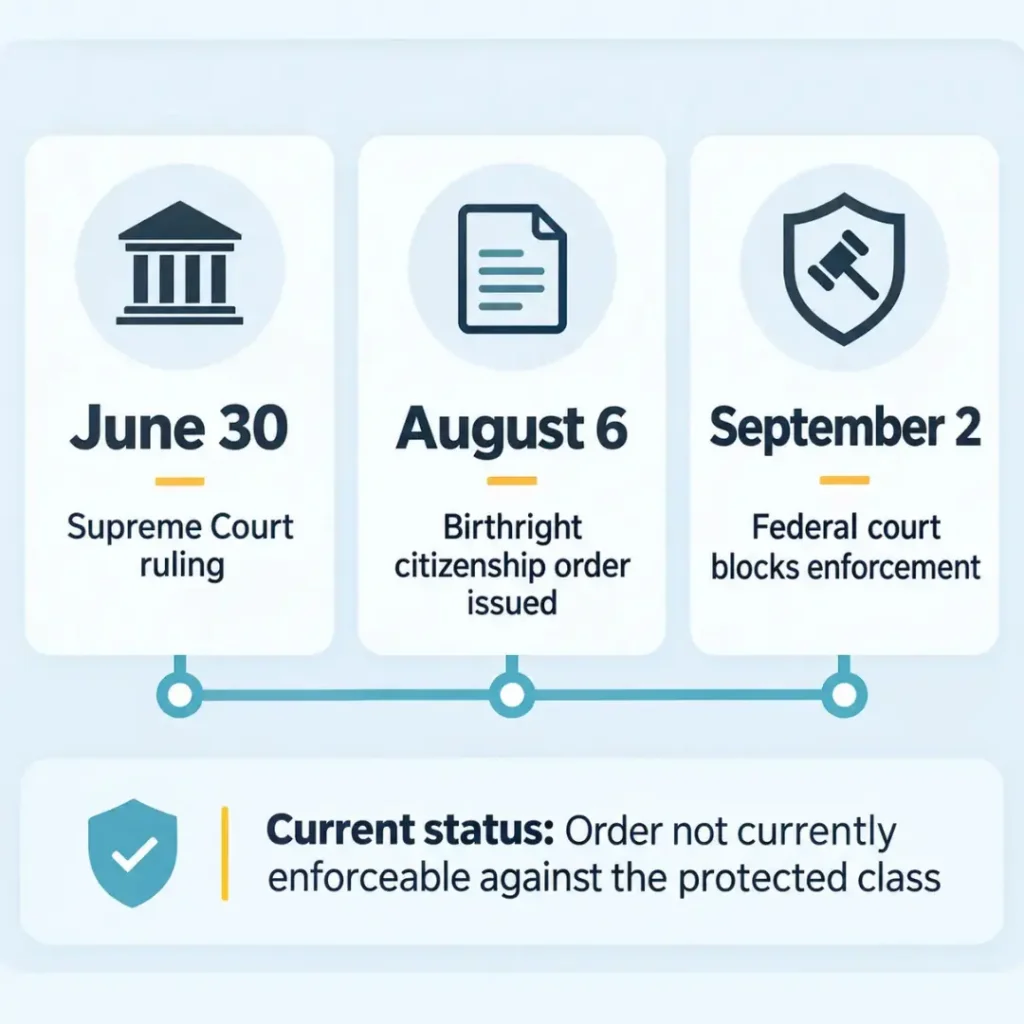
On August 6, the Trump administration issued a new birthright citizenship order that expressly included certain surrogacy arrangements. Less than a month later, a federal court blocked enforcement of the order against a certified class of children.
The ruling gives affected families more clarity about where things stand today. It does not end the larger legal dispute.
So what exactly did the court block, why was surrogacy included in the order, and what does the decision mean for families planning a U.S. surrogacy birth?
Key Takeaways
- The August 6 citizenship order is currently blocked from enforcement against the certified class.
- The order expressly addressed certain surrogacy arrangements. It referred to cases involving a “commercial transaction with a surrogate” in the United States or a U.S. territory.
- The injunction is preliminary. The underlying legal challenge is still being decided.
- International gestational surrogacy and birth tourism are not the same arrangement. The administration addressed birth tourism in a separate August 6 order.
- Citizenship is only one part of the legal picture. Parentage, birth records, passports, travel, and recognition in a family’s home country can involve separate legal processes.
What Did the September 2 Ruling Change?
The most important change is practical.
In the September 2 preliminary injunction, U.S. District Judge Deborah Boardman barred federal agencies from enforcing the August 6 citizenship order against members of the certified class. The court also prohibited agencies from interfering with, denying, or failing to recognize their citizenship while the injunction remains in place.
Federal agencies may still prepare public guidance about how the order could operate if it later becomes enforceable. But preparation is not the same as enforcement.
The ruling is preliminary, not a final judgment on every legal question raised by the order. Even so, it gives families covered by the injunction a much clearer answer about the rule that applies to them today.
Why Did the August Order Include Surrogacy?
The answer begins with the Supreme Court.
On June 30, the Court ruled in Trump v. Barbara that children born in the United States to parents who are unlawfully present or here temporarily are citizens at birth under the Fourteenth Amendment.
The administration responded several weeks later with an August 6 executive order on birthright citizenship. Instead of focusing only on a parent’s immigration status, the order identified additional situations that it argued should fall outside birthright citizenship.
One of those situations expressly involved surrogacy.
The order instructed federal agencies not to recognize citizenship in certain cases when neither parent is a U.S. citizen and a parent engages in what the order calls a “commercial transaction with a surrogate” who is present in the United States or a U.S. territory to give birth.
That distinction matters. Surrogacy was expressly included in the federal policy itself, rather than drawn into the issue later through media interpretation or industry speculation.
The September injunction prevents that provision from being applied to the protected class while the challenge proceeds.
What Does the Ruling Mean for Children Born Through U.S. Surrogacy?
For families covered by the injunction, the immediate answer is reassuring: the challenged citizenship restriction cannot currently be applied to them.
The larger litigation still matters, but families should not treat the August order as though it is presently being enforced against the certified class.
The Supreme Court’s June ruling also provides important context. It affirmed citizenship at birth for children born in the United States to parents who are unlawfully present or here temporarily. The August order then sought to identify additional circumstances in which citizenship would not be recognized, including the surrogacy provision now subject to the injunction.
For affected international families, the result is a clearer legal position today, even as the broader dispute continues.
Is International Surrogacy the Same as Birth Tourism?
No. Those terms describe different situations.
The administration issued a separate August 6 order on birth tourism focused on foreign nationals entering the United States on nonimmigrant visas for the purpose of giving birth here.
A typical international gestational surrogacy arrangement is structured differently. The surrogate carries the pregnancy and gives birth in the United States. The intended parents may travel to the U.S. near delivery, but they are not themselves entering the country to give birth.
The administration’s own August actions reflect that distinction. Birth tourism was addressed separately, while certain surrogacy arrangements were included in the citizenship order.
That does not resolve every immigration or travel question an international family may have. It does mean that international surrogacy should not automatically be treated as birth tourism simply because the intended parents live abroad.
Citizenship Is Only One Part of the Legal Picture
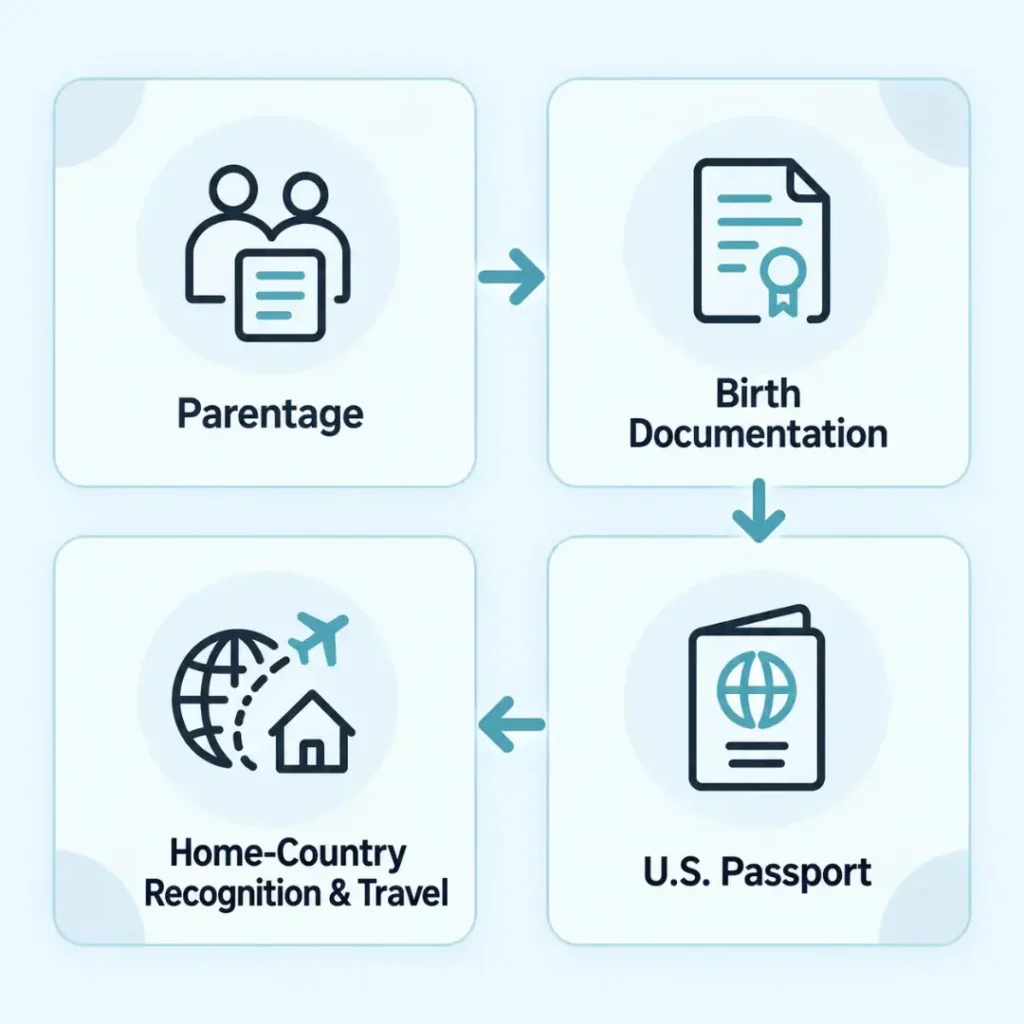
For international intended parents, a citizenship ruling does not resolve every legal step surrounding a U.S. surrogacy birth.
Families may still need to determine:
- who will be recognized as the child’s legal parents;
- whose names will appear on the birth certificate;
- how U.S. citizenship will be documented;
- what is required to obtain a U.S. passport;
- whether the intended parents’ home country will recognize the U.S. parentage decision;
- whether the child can acquire citizenship or nationality through the intended parents; and
- which documents will be required to travel home.
These questions are connected, but they are not legally interchangeable.
For example, pre- and post-birth parentage orders establish legal parentage through the applicable state process. They do not independently determine federal citizenship or how another country will recognize that parentage.
Likewise, passport and travel requirements can involve federal documentation as well as requirements imposed by the family’s home country.
For international families, the practical goal is to coordinate these steps early enough that one process does not unexpectedly delay another.
What Does This Mean for Families With an Active Surrogacy Case?
Families already pursuing surrogacy in the United States do not need to redesign their plans simply because of the August order.
For those covered by the injunction, the challenged citizenship restriction is not currently being enforced.
The more useful focus is on the legal and logistical steps that still apply to the family’s particular case. Depending on the circumstances, those may include parentage, birth records, a U.S. passport, home-country recognition, and international travel documentation.
Families approaching delivery should confirm those requirements before birth, when there is still time to coordinate any additional documents or legal steps.
If these issues affect an active case, an FSLG international surrogacy attorney can help clarify the parentage, documentation, and travel requirements that may apply before delivery.
What About Clinics and Agencies Serving International Families?
For fertility clinics and surrogacy agencies, the ruling is primarily an active-case coordination issue rather than a new compliance regime.
International families may ask how the latest ruling affects citizenship documents, passports, or post-birth travel. Clinics and agencies can continue handling the medical and coordination responsibilities within their roles while directing legal questions to appropriate counsel.
As the case develops, the practical priority is to stay current on the rules affecting active international cases rather than trying to predict the final outcome of the litigation.
What Has Not Changed?
The headlines are significant, but they should not be read more broadly than the law supports.
International surrogacy has not become illegal in the United States.
State laws governing surrogacy agreements and legal parentage remain in place.
International gestational surrogacy also does not become birth tourism simply because the intended parents live outside the United States.
The September ruling addresses the new federal citizenship restriction. It does not replace the broader legal framework governing surrogacy and parentage.
For families covered by the injunction, that means the immediate citizenship issue is clearer while the familiar work of planning parentage, documents, and travel continues.
What International Families Should Do Next
The September ruling gives affected families more clarity about the citizenship rule that applies today. At the same time, parentage, birth documentation, passports, home-country recognition, and international travel remain important parts of planning for a U.S. surrogacy birth.
Families approaching delivery should confirm the requirements that apply to their circumstances early enough to address any additional legal or documentation steps.
That planning becomes especially important with international surrogacy in the United States, where state parentage law, federal documentation, and home-country requirements may all intersect.
FSLG works with international intended parents on surrogacy, parentage, birth documentation, passports, and cross-border legal planning. The firm also supports fertility clinics and surrogacy agencies serving international families.
Have questions about an active international surrogacy case? FSLG can help review the legal and documentation requirements that may apply before delivery.
Frequently Asked Questions
A federal court has issued a preliminary injunction blocking enforcement against the certified class. The injunction remains in place while the underlying legal challenge proceeds.
Yes. The order expressly included certain cases in which a parent engages in what it calls a “commercial transaction with a surrogate” present in the United States or a U.S. territory when neither parent is a U.S. citizen.
Not automatically. The separate birth-tourism order focuses on a foreign national entering the United States on a nonimmigrant visa for the purpose of giving birth. In a typical international gestational surrogacy arrangement, the surrogate is the person carrying the pregnancy and giving birth in the United States.
No. A parentage order establishes legal parentage through the applicable state process. Citizenship is a separate issue governed by federal law.
Families approaching delivery should confirm the requirements that apply to their case. Depending on the circumstances, those may include parentage, birth documentation, citizenship, passports, recognition in their home country, and international travel documents.

Rich Geisler is the principal and founder of Fertility & Surrogacy Legal Group, leveraging over a decade of expertise in fertility and third-party reproduction law to help clients worldwide build their families. A dedicated advocate and trusted advisor, Rich is an active member of the American Bar Association and a fellow in the Academy of Adoption and Assisted Reproduction Attorneys.