

Surrogacy involves a series of payments that can extend from the legal process through pregnancy and beyond birth. Surrogacy escrow services keep those payments organized by holding funds in a dedicated account and distributing them under written instructions.
For intended parents, this creates a clear record of where their money goes. For the surrogate, it provides a consistent way to receive compensation and approved reimbursements. Just as important, neither side has to manage every transaction directly with the other.
The account alone does not provide every protection, though. The surrogacy agreement must define what is owed, when payments are due, and who can approve them. The parties also need to understand who holds the money and which safeguards apply.
What Is a Surrogacy Escrow Account?
A surrogacy escrow account holds money that intended parents will need to meet their financial obligations. Instead of paying each expense themselves, intended parents deposit an agreed amount into an account managed by an escrow provider, law firm, or other authorized administrator.
The manager then releases money according to the governing documents. Depending on the arrangement, payments may include surrogate compensation, medical expenses, insurance costs, travel, lost wages, childcare, and other approved reimbursements.
This creates a layer of separation between the personal relationship and the financial process.
A surrogate does not have to contact the intended parents whenever an approved expense is due. In turn, intended parents do not have to review and arrange every payment themselves.
However, not every account uses the same legal structure. An independent escrow company may hold the money, while a law firm may use an attorney-client trust account. Each structure carries different duties and protections.
The parties' attorneys can explain which one applies and how it should be addressed in their agreement.
How Does Surrogacy Escrow Work?
Although the details differ from one case to another, surrogacy escrow account management usually follows four stages.
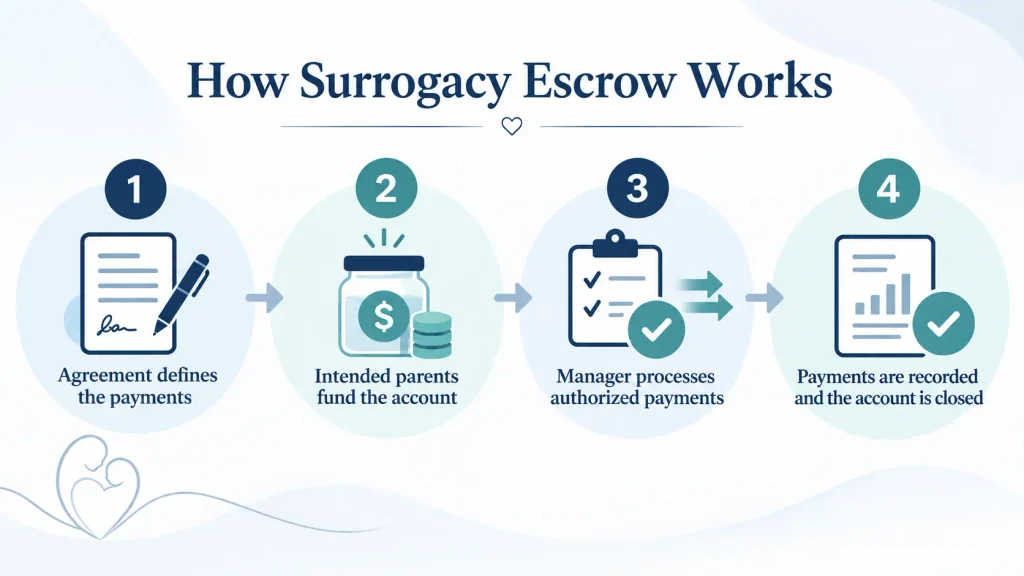
1. The Surrogacy Agreement Defines the Payments
A well-drafted gestational surrogacy agreement should identify the parties' financial responsibilities. This may include payment amounts, due dates, reimbursement procedures, minimum balances, and the events that trigger specific payments.
Some payments may be tied to milestones such as embryo transfer or pregnancy confirmation. Others may require an invoice, receipt, or request for an expense covered by the agreement.
These details give the account manager clear instructions. They also allow intended parents and the surrogate to review the payment terms before treatment begins.
2. The Intended Parents Fund the Account
The intended parents deposit the required amount by the deadline established for their case. That deadline may come from the contract, applicable law, fertility clinic, agency, or surrogacy program.
According to the Academy of Adoption and Assisted Reproduction Attorneys' guidance on escrow accounts, surrogacy accounts are typically funded before the first embryo transfer. The exact timing and required balance should still be confirmed for each arrangement.
3. The Manager Processes Authorized Payments
Some payments become due automatically after a contract milestone. Others require supporting documents from the surrogate, agency, medical provider, or another approved recipient.
The account manager reviews each request against the written terms. Once the payment is authorized, the money can be sent through direct deposit, wire transfer, or another accepted method.
The manager does not decide what the parties should owe. Instead, the manager follows the obligations they have already established.
4. Payments Are Recorded, and the Account Is Closed
Each disbursement should be recorded so the intended parents can follow the balance and see how their money has been used. Clear records also make it easier to identify a missing or disputed payment.
The account remains open until the obligations assigned to it have been resolved. This may include final medical bills, post-birth expenses, or outstanding reimbursements. The governing documents should also explain when unused funds can be returned.
Planning your surrogacy agreement? Financial terms should be settled before treatment begins. FSLG helps intended parents create agreements that address funding deadlines, payment triggers, reimbursements, and unexpected expenses.
Discuss Your Surrogacy AgreementHow Escrow Protects Both Parties
Escrow cannot remove every financial risk. Still, a properly structured account gives intended parents and surrogates a more reliable payment process.
Protection for Intended Parents
Intended parents receive a record of what has been paid and what remains in the account. Written approval rules can also help prevent money from being released for expenses that are not covered by the agreement.
This structure makes it easier to track financial obligations without handling each transaction personally. If a question arises, the parties can refer to the contract and account records rather than relying on memory or informal conversations.
Protection for Surrogates
A funded account shows that money has been set aside for agreed compensation and expenses. For surrogates receiving independent legal representation, the payment terms can be reviewed before the contract is signed.
This helps ensure that compensation, reimbursements, and dispute procedures are clearly documented from the start.
By separating payments from the personal relationship, escrow can reduce tension and allow both parties to communicate more openly.
Is Escrow Required for Surrogacy?
There is no single nationwide rule requiring the same financial structure in every case. State law varies, and additional requirements may come from the contract, fertility clinic, agency, or surrogacy program.
For example, California requires surrogacy agreements to address medical expenses for the surrogate and newborn. The state also requires intended parents and surrogates to have separate attorneys.
New York places additional requirements on covered surrogacy programs. These programs must keep intended-parent funds, apart from program fees, in an escrow account separate from their operating money.
Because the rules are not uniform, a simple yes-or-no answer can be misleading. The parties' attorneys should identify the legal and contractual requirements before money is deposited or treatment begins.
How to Choose a Surrogacy Escrow or Fund Manager
The word "escrow" does not tell you how an account is protected. Before transferring money, intended parents should ask:
- Who will legally hold and manage the funds?
- What type of account will be used?
- How will client money be separated, identified, and tracked?
- What professional rules, licensing, bonding, or insurance apply?
- Who can authorize a payment, and what proof is required?
- What account statements will the parties receive?
- How will disputed requests and unused balances be handled?
- What happens if the fund manager stops operating?
Independent management can reduce conflicts by separating the organization holding the money from the agency coordinating the arrangement. The SEEDS standards for escrow providers emphasize qualified management, financial safeguards, oversight, and transparency.
A law firm's attorney-client trust account follows a different framework. Legal ethics rules and trust-account requirements may control how the money is held and distributed.
Instead of relying on labels, intended parents should ask which protections apply to the specific account.
How FSLG Manages Surrogacy Funds
Fertility & Surrogacy Legal Group provides in-house accounting and fund management, primarily for intended-parent clients. Depending on the legal and contractual requirements, client money may be held in escrow or an attorney-client trust account.
FSLG's dedicated accounting team processes authorized payments and reimbursements to surrogates, agencies, and third-party vendors. It can send payments by direct deposit or wire transfer. Clients also receive itemized statements detailing each disbursement.
These surrogacy escrow and financial management services connect the payment process to the terms of the underlying legal agreement.
Clear records and written payment procedures can prevent avoidable confusion. FSLG can help you determine how funds should be held, distributed, and documented for your arrangement.
Explore Financial Management ServicesFrequently Asked Questions About Surrogacy Escrow
When should intended parents fund the account?
Funding commonly occurs before the first embryo transfer. However, the exact deadline and required balance depend on the contract and any applicable state, clinic, agency, or program requirements.
How much do surrogacy escrow services cost?
Surrogacy escrow fees vary by provider and account structure. Intended parents should request a written fee schedule that covers setup, administration, wire transfers, extended management, and account closure. The parties should also confirm who is responsible for these charges.
Who controls the money in a surrogacy escrow account?
That depends on the account structure and written instructions. The manager should release money only when authorized under the surrogacy agreement, escrow agreement, trust-account terms, or other governing documents.
What happens to unused escrow funds?
Unused funds are handled according to the contract and account terms. Before returning a balance, the manager may need to confirm that all compensation, reimbursements, medical bills, and other approved expenses have been resolved.
Get Clear About Your Surrogacy Finances
Financial obligations should be clear before treatment begins. FSLG provides legal guidance for intended parents on surrogacy agreements, payment responsibilities, and fund-management arrangements.
Book your free consultation to discuss your case.
Book your free consultation to discuss your case.
Book Your Free Consultation
Rich Geisler is the principal and founder of Fertility & Surrogacy Legal Group, leveraging over a decade of expertise in fertility and third-party reproduction law to help clients worldwide build their families. A dedicated advocate and trusted advisor, Rich is an active member of the American Bar Association and a fellow in the Academy of Adoption and Assisted Reproduction Attorneys.