
HELPING BUILD FAMILIES SINCE 2012
Georgia Fertility & Surrogacy Lawyers
FSLG's Georgia-licensed fertility and surrogacy attorneys help intended parents, gestational carriers, donors, agencies and clinics navigate the legal side of assisted reproduction.


Since 2012
Helping Build Families

Multi-State
Licensed Attorneys

100% Focused
Reproductive Law

Worldwide
Support & Coordination
Your Fertility & Surrogacy Attorneys

Rich Geisler
Principal & Founder

Erin O. Allen
Senior Associate Attorney

Megan Gruter
Associate Attorney

David Hinton
Associate Attorney
Who We Represent in Georgia
Our role is not simply to prepare paperwork
We are here to help you understand the legal path before you make important decisions and to keep the legal pieces coordinated with your clinic, agency, surrogate, donor and other professionals involved in the journey.

Intended Parents
Understand the agreements, parentage steps and legal decisions needed to move from planning through birth with a clearer legal framework.

Gestational Carriers & Surrogates
Receive independent legal representation to understand your agreement, responsibilities, compensation provisions, medical-decision terms and other rights before signing.

Egg, Sperm & Embryo Donors
Create clear agreements addressing intent, responsibilities, confidentiality, future contact and the legal relationship between donor and intended family.

LGBTQ+ & Single Intended Parents
Plan for parentage based on your specific family structure, use of donor material and the jurisdictions involved in your journey.

International Intended Parents
Coordinate U.S. fertility-law requirements with birth records, passports, travel documentation and home-country legal considerations.

Agencies, Clinics & Donor Programs
Support agreements, forms and legal processes that help keep professional and client expectations clear from the beginning.
When Should You Connect with a Fertility Lawyer?
Agencies, clinics, donor programs and surrogacy arrangements can introduce contracts, consent forms and legal deadlines at different points in the journey. An experienced fertility lawyer can help you identify the legal steps early enough so that they can be handled in the right order.
1
Before choosing an arrangement
Which state's laws may apply to the people involved?
2
Before signing agency/clinic documents
Do the documents align with your legal plan and intentions?
3
Before signing a donor/surrogacy agreement
Are rights, responsibilities, financial terms and important contingencies clear?
4
Before embryo transfer
Have the legal prerequisites for the arrangement been completed?
5
During pregnancy
When should the parentage process begin?
6
Before birth or international travel
What court orders, records, certificates, or travel documents may be needed?
Fertility & Surrogacy Legal Solutions in Georgia
A fertility journey can involve several different legal needs — not simply one agreement. FSLG helps clients coordinate the legal work across the stages of a Georgia or multi-state family-building journey.

Gestational Surrogacy Agreements
We draft and review agreements addressing the rights, responsibilities, expectations and important contingencies between intended parents and gestational carriers before the medical process moves ahead.

Parentage & Pre-/Post-Birth Orders
We help intended parents plan and complete the applicable legal process for establishing parentage and coordinating the necessary court orders and post-birth documentation.

Egg Donation Agreements
We prepare and review egg donation agreements documenting the parties' intentions, responsibilities, expectations, confidentiality considerations and other terms relevant to the arrangement.

Embryo Donation & Disposition
Georgia has specific statutory provisions governing embryo donation and relinquishment. FSLG assists donor and recipient families with agreements addressing the legal transfer, intentions and future use or disposition of embryos.

Sperm Donation Agreements
Known and directed sperm-donation arrangements can raise important questions about intent, parentage and future relationships. We help parties document those intentions clearly before treatment.

Hospital & Vital Records
We help coordinate parentage documentation with hospitals and vital-record procedures so the legal planning completed before birth can carry through to the records families need afterward.

International & Cross-Border Family Building
When intended parents, surrogates, donors or treatment providers are located in different states or countries, we help identify and coordinate the legal requirements that may intersect across jurisdictions.

Escrow & Financial Management
FSLG provides funds-management support for applicable fertility and surrogacy arrangements, helping parties manage agreed financial obligations through a structured process.
Why You Need an Experienced Georgia Fertility Lawyer
Georgia currently has no comprehensive statute specifically permitting or prohibiting gestational surrogacy. Georgia courts typically uphold surrogacy agreements and pre-birth parentage orders are usually granted in many circumstances, although the appropriate procedure can depend on the facts and court involved.
Different rules and legal procedures can apply depending on whether your journey involves gestational surrogacy, donated sperm or eggs, donated embryos, IVF, parentage proceedings or people located in different states.
That makes the agreement and the legal strategy surrounding it especially important.
What are the Steps to the Surrogacy Process In Georgia?
If you intend to pursue surrogacy in Georgia, you will need to follow several important steps to a successful and legally compliant process:
1
Consult with a fertility specialist
2
Choose a surrogacy agency
3
Legal consultation
4
Screening and matching
5
Create a surrogacy agreement
6
Fertility treatments
7
Pregnancy and monitoring
8
Birth and legal finalization
Our team at Fertility & Surrogacy Legal Group, APC, is knowledgeable and experienced in providing fertility legal assistance in Georgia and will guide you through every step.
Georgia Fertility & Surrogacy Law at a Glance
| Journey | Georgia legal framework | Why the agreement matters |
|---|---|---|
| Gestational surrogacy | No comprehensive Georgia surrogacy statute specifically permitting or prohibiting it | Agreement defines intent, responsibilities, financial terms, contingencies and provides the foundation for legal planning |
| IVF / Assisted reproduction | O.C.G.A. §19-7-21 was expanded in 2025 to include IVF and similar ART in the circumstances covered by the statute | Written consent and family circumstances can affect parentage |
| Egg donation | No single statute resolves every possible arrangement | Written intent, donor status and parentage planning matter |
| Sperm donation | Statutes and case law address certain circumstances, but not every donor arrangement | Agreement should document parental intent and donor expectations |
| Embryo relinquishment | O.C.G.A. §§19-8-40–43 establish a specific statutory framework | A written agreement is expressly required before embryo transfer under §19-8-41 |

One Legal Team for Multi-State Fertility & Surrogacy Journeys
You may live in Georgia while your gestational carrier lives in California or Washington. Your donor may live in Colorado. Treatment may occur in another state, while the birth takes place somewhere else entirely.
Each of those connections can affect which state's law applies, what an agreement needs to address and where or how parentage should be established.
FSLG's multi-state licensing gives Georgia families an important advantage since our attorneys are licensed in multiple U.S. states, we maintain relationships with reproductive-law counsel throughout the country for matters requiring additional local counsel.
We help look at the journey as a whole, identifying jurisdictional issues early and coordinating the legal work that needs to happen across states.
Do I Need a Fertility Lawyer Near Me in Georgia?
Not necessarily.
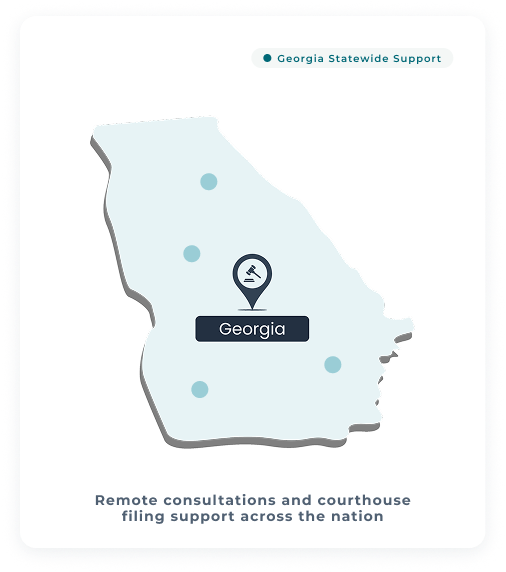
Many parts of a fertility or surrogacy legal matter including consultations, document review, contract negotiations and coordination with clinics, agencies and other counsel can be handled remotely.
What matters more is whether the lawyer is appropriately licensed for the work involved and understands fertility, surrogacy and reproductive law.
Our attorneys assist with fertility and surrogacy matters throughout the state of Georgia, including matters connected with Atlanta, Savannah, Augusta, Athens, Macon, Columbus and other communities.
If your family-building journey crosses state lines, our multi-state capabilities allow us to evaluate those additional jurisdictional issues as part of the same broader legal strategy.
Why Georgia Families Choose FSLG
Focused on Reproductive Law
Fertility, surrogacy and assisted reproduction are central to FSLG's practice—not an occasional extension of a general family-law practice.
Georgia-Licensed Attorneys
Our attorneys are licensed to handle Georgia reproductive legal matters, combined with experience in third-party reproduction and family formation.
Multi-State Legal Capability
When intended parents, carriers, donors, clinics or births span multiple states, we can help coordinate the jurisdictions involved rather than treating each step in isolation.
Support Beyond the Agreement
Our services can continue through parentage, hospital coordination, vital records, passports and travel documentation, international matters and applicable financial-management needs.
What Families Say About Working With FSLG
Frequently Asked Questions About Georgia Reproductive Attorneys
Is gestational surrogacy legal in Georgia?
Georgia does not currently have a comprehensive statute specifically permitting or prohibiting gestational surrogacy. Surrogacy is nevertheless practiced in Georgia, and reproductive-law practitioners report that Georgia courts typically recognize surrogacy arrangements and grant parentage orders in many circumstances.
Because Georgia relies heavily on agreements and court practice rather than a comprehensive surrogacy statute, the facts of the arrangement and the legal strategy matter.
When should I contact a Georgia fertility lawyer?
It is generally helpful to involve counsel before signing documents or reaching a legal milestone that depends on those documents being complete. That may mean before executing a surrogacy or donor agreement, finalizing important agency or clinic paperwork, moving toward embryo transfer or beginning the parentage process.
Early legal planning also gives your attorney time to identify whether another state's law may affect your journey.
What should a Georgia surrogacy agreement include?
The agreement should be tailored to the specific arrangement. Common subjects include parental intent, the parties' rights and responsibilities, compensation and expenses, insurance, treatment and embryo-transfer expectations, medical decision-making, pregnancy-related issues, communication, confidentiality, delivery planning, parentage and contingencies.
An attorney should evaluate the agreement in the context of the entire journey rather than treating it as a generic template.
Does Georgia have laws covering IVF and assisted reproduction?
Yes. O.C.G.A. §19-7-21 addresses children conceived through artificial insemination, IVF or another similar form of assisted reproduction in the marital circumstances specified by the statute when both spouses have consented in writing.
The statute was expanded in 2025 to expressly include IVF and similar assisted reproduction. Different rules or legal procedures can apply outside the circumstances covered by that provision.
Does Georgia have an embryo-donation law?
Georgia has a specific statutory framework for embryo relinquishment under O.C.G.A. §§19-8-40 through 19-8-43.
Section 19-8-41 requires a written agreement between the legal embryo custodian and recipient intended parent before embryo transfer and sets out requirements concerning the legal transfer of rights.
Can a Georgia fertility lawyer help with egg or sperm donor agreements?
Yes. Donor agreements can document parental intent, the donor's intended legal role, responsibilities, confidentiality, future contact, treatment arrangements and other expectations.
Because Georgia does not provide one statutory rule covering every possible donor arrangement, the facts and structure of the donation should be evaluated individually.
Can FSLG help if I live in Georgia but my surrogate lives in another state?
Yes. A fertility or surrogacy journey may involve more than one jurisdiction.
If you live in Georgia while your surrogate, donor, clinic or anticipated birth is connected to another state, the legal strategy should account for each relevant jurisdiction. FSLG's attorneys are licensed in multiple states and can coordinate with reproductive-law counsel elsewhere when another jurisdiction requires it.
Does my Georgia fertility lawyer need to be located near me?
Not always. Consultations, agreement review, negotiations and coordination with other professionals can often be handled remotely.
What matters is whether counsel is appropriately licensed and experienced with the reproductive-law issues involved. FSLG has Georgia-licensed attorneys and assists clients with matters throughout the state.
Can a fertility lawyer help with parentage and birth records in Georgia?
Yes. Depending on the family-building arrangement, legal work may include planning and pursuing the appropriate parentage process and coordinating court documentation with the hospital and vital-record procedures after birth.
The appropriate process depends on how the child was conceived, the parties involved and the jurisdictions connected to the journey.