
Nationwide Surrogacy Lawyers for Intended Parents
Protecting your rights before you sign, match or begin treatment.
FSLG attorneys provide legal guidance for surrogacy agreements, independent representation, legal clearance, parentage, birth records, and multistate or international arrangements for intended parents and surrogates.
Helping Build Families Since 2012
Focused fertility and surrogacy law
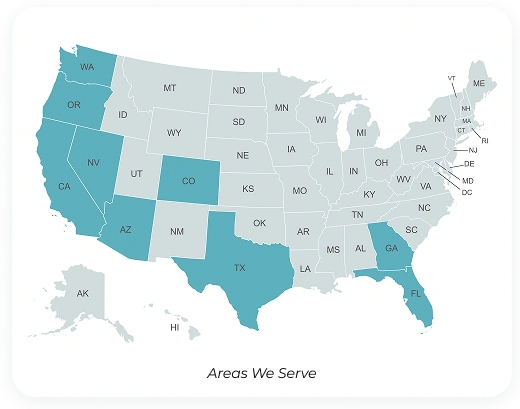
Fertility Attorneys Licensed in Nine States
Arizona, California, Colorado, Florida, Georgia, Nevada, Oregon, Texas and Washington
Nationwide and International Coordination
Nationwide Of-counsel and reproductive law network, international legal coordination
Who We Offer Legal Help

Intended Parents
Full-service legal support for soon-to-be parents

International Parents
U.S. legal support for cross-border coordination.

LGBTQ Family Building
Clear legal guidance protecting every family’s rights.
What Does a Surrogacy Lawyer Do?
A surrogacy lawyer helps connect the legal stages of the arrangement. The exact scope depends on the client represented, the structure of the arrangement, and the states or countries involved.

Review Agency and Clinic Documents
Agency agreements and clinic forms may contain binding terms related to fees, services, cancellation, consent, storage, financial responsibility, and dispute procedures. An attorney can review these documents before you commit, explain the obligations involved, and identify terms that need clarification.

Draft and Negotiate the Surrogacy Agreement
The gestational surrogacy agreement defines the intentions, rights, responsibilities, and expectations of the intended parents and surrogate. One attorney generally prepares the initial draft. The other party's independent attorney reviews it and proposes revisions where appropriate.

Provide Independent Legal Representation
Intended parents and surrogates need separate attorneys because their legal interests are not identical. Donors may also need separate counsel when donated eggs, sperm, or embryos are involved.

Address Financial, Insurance, and Medical Terms
The agreement may address compensation, reimbursements, escrow, lost wages, childcare, travel, insurance, uncovered medical expenses, medical decisions, and foreseeable contingencies.

Confirm Legal Clearance Before Embryo Transfer
After the applicable agreement has been signed and notarized, FSLG issues a legal-clearance letter directly to the IVF clinic or agency. The letter confirms that the required legal documents have been completed so the clinic can decide whether to proceed under its protocols.

Plan for Parentage, Birth Records, and Travel
The agreement may not complete legal parentage by itself. Intended parents may also need a pre-birth order, post-birth order, adoption, or another legal procedure. FSLG also assists with hospital coordination, birth certificates, vital records, passports, apostilles, and related travel documentation.
When Should You Contact a Surrogacy Attorney?
Contact a surrogacy attorney before signing binding documents and before embryo transfer. You do not need to wait until you have matched with a surrogate.
Early involvement allows the attorney to identify which issues need attention now and which can be addressed later. It may also help identify unexpected liabilities or unclear responsibilities in an agency agreement before you sign.
- Before signing an agency agreement
- Before committing to a known surrogate
- Before signing clinic documents with legal implications
- After matching with a surrogate
- Before signing the surrogacy agreement
- Before funding escrow
- Before medications or embryo transfer
- When the parties live in different states
- When the intended parents live outside the United States
- When parentage or birth-record requirements are unclear
Who Does a Surrogacy Lawyer Represent?
The intended parents and surrogate are working toward the same goal, but each party needs advice aligned with their own interests. An agency or clinic may provide referrals or coordinate the process, but neither replaces independent legal counsel.

Legal Representation for Intended Parents
The intended parents' attorney may review the states and countries involved, negotiate the agreement, confirm legal clearance, plan the parentage process, and coordinate hospital and birth-related documentation.
Explore surrogacy law for intended parents
Independent Legal Counsel for Surrogates
The surrogate's attorney reviews the proposed agreement, explains her rights and obligations, answers questions, and negotiates changes where appropriate. The review may cover compensation, insurance, medical expenses, medical decisions, travel, lost wages, childcare, escrow, communication, privacy, and responsibilities before and after birth. California requires separate independent counsel in qualifying gestational surrogacy arrangements. Separate representation is also commonly used in other jurisdictions, subject to applicable law and professional ethics rules. In a typical arrangement, the intended parents pay the surrogate's reasonable legal fees. Her attorney nevertheless represents only her interests.
Explore about surrogacy law for surrogates
When Donor Agreements are Also Needed
Some arrangements involve donated eggs, sperm, or embryos. A separate donor agreement may be needed to address parental intent, compensation, confidentiality, disclosure, future contact, and the donor's rights and responsibilities.
What is Included in a Gestational Surrogacy Agreement?
A gestational surrogacy agreement is not simply a payment contract. It commonly addresses:
Addressing these matters before treatment gives the parties a shared legal framework for decisions, payments, communication, and unexpected changes.
- Parentage and legal intent
- Compensation, reimbursements, escrow, and expenses
- Medical care and decision-making
- Insurance and financial responsibility
- Communication, privacy, and travel
- Contingencies, delivery, and post-birth responsibilities


Parentage, Hospital Records, Birth Certificates
Signing the surrogacy agreement is not always the same as legally establishing parentage.
Depending on the jurisdiction and family circumstances, intended parents may need a pre-birth parentage order, post-birth parentage order, adoption, confirmatory proceeding, or another court or administrative process.
The appropriate process may depend on the birth state, the intended parents' home state or country, marital status, genetic relationships, and family structure.
Parentage planning should begin well before delivery. This gives the legal team time to prepare filings, identify the correct court, coordinate with local counsel, and provide necessary documents to the hospital.
Family structure can also affect the legal strategy. LGBTQ+ intended parents may need a process that accounts for marital status, genetic relationships, or the number of intended parents.
Multistate Surrogacy Matters
One arrangement may connect several states. The intended parents may live in one state, the surrogate in another, the clinic elsewhere, and the birth may occur in a different jurisdiction.
These connections can affect which law applies, where a parentage case may be filed, what the hospital requires, how the birth record will be prepared, and whether local counsel is needed.
FSLG attorneys are licensed in Arizona, California, Colorado, Florida, Georgia, Nevada, Oregon, Texas, and Washington.
Our team also coordinates matters in other jurisdictions through strategic partnerships with local counsel and a nationwide network of reproductive law attorneys, subject to applicable law and the availability of lawful surrogacy arrangements.
California | Colorado | Florida | Georgia | Oregon | Texas | Washington

International Surrogacy Matters
International intended parents using a U.S. surrogate must plan for both U.S. requirements and the laws of their home country.
The process may involve the surrogacy agreement, legal clearance, parentage orders, birth certificates, passports, apostilles, citizenship-related documentation, embassy or consular requirements, and travel planning.
FSLG provides cross-border legal coordination for intended parents from Europe, Asia, Australia, and other regions. Our Attorneys assist with U.S. parentage, birth, passport and citizenship-related documentation and coordinates with immigration professionals, embassies, consulates, and home-country attorneys when additional advice is required.
No U.S. law firm can guarantee how another country will recognize a parentage order or citizenship claim. Starting early helps identify requirements and gather documents before the birth.
FSLG has helped eligible families pursue expedited newborn passport processing in as little as five to seven days. Timing depends on government requirements, appointment availability, cooperation among the parties, and document readiness.
Words from Our Families

How Much Does a Surrogacy Lawyer Cost?
Surrogacy lawyer costs vary because the required legal work differs from one arrangement to another.
Fees may depend on the party represented, agreement complexity, negotiation required, jurisdictions involved, parentage filings, local-counsel involvement, hospital and vital-record support, passport or apostille services, escrow work, and international coordination.
Some services may be offered for a flat fee. Others may require a customized quote or separate scope of work.
In a typical arrangement, the intended parents also pay the surrogate's reasonable independent legal fees.
FSLG does not use one universal price for every matter. The anticipated services and fee structure are explained during the consultation or engagement process.
How to Choose Your Surrogacy Attorney
A surrogacy lawyer should do more than produce a contract. The attorney should understand how the agreement connects to medical treatment, legal clearance, parentage, hospital procedures, birth records, and multistate or international requirements.
Consider:
- How much of the practice focuses on fertility and surrogacy law
- Experience with the relevant state or states
- Who drafts the agreement and how independent review works
- Experience with the likely parentage process
- How the surrogate's independent counsel is selected and paid
- Whether the quoted scope includes clearance, parentage, hospital coordination, and international work
- Their ability to coordinate across states or countries
- How clearly fees and communication are explained
- Relevant professional memberships and credentials
Why Families Trust FSLG
Fertility law touches everything from a clinic consent form to a passport office. Families around the world choose FSLG to have one team that understands the whole arc and catches what others miss.

Focused on Fertility Law
Fertility, surrogacy and assisted reproduction law is the whole practice for FSLG, not a sideline to family law or estate planning.

One Team, Start to Finish
Agency and clinic review, agreements, legal clearance, parentage orders, hospital coordination, vital records, passports, apostilles and escrow - every aspect handled by the same firm.

Licensed Nationwide, Connected Worldwide
FSLG attorneys are licensed in Arizona, California, Colorado, Florida, Georgia, Oregon, Nevada, Texas, Washington. Outside those states, we coordinate directly with local counsel through a nationwide network.

Every Path to Parenthood
Our attorneys are recognized members of the Academy of Adoption & Assisted Reproduction Attorneys and ABA Family Law's ART Division and support heterosexual parents, LGBTQ+ families, single parents throughout the nation and internationally.
Frequently Asked Questions
What type of lawyer do you need for surrogacy?
Look for an attorney who focuses on assisted reproductive technology, fertility law, family formation, and surrogacy. The lawyer should understand agreements, independent representation, legal clearance, parentage orders, hospital coordination, and birth records.
When should I hire a surrogacy lawyer?
Contact a lawyer before signing binding documents or proceeding with embryo transfer. Earlier review can identify jurisdiction, compensation, insurance, parentage, and documentation issues before they cause delays.
Does a surrogacy agency provide the lawyer?
An agency may refer clients to attorneys or help coordinate the process. However, the agency itself does not replace independent legal representation for the intended parents or surrogate.
Who chooses the attorneys in a surrogacy arrangement?
The parties may receive referrals from an agency, clinic, or existing attorney. Each party should generally have an opportunity to select or approve the attorney who will represent them.
Can one attorney represent the intended parents and surrogate?
The parties generally have different legal interests, so they typically receive separate representation. California requires independent counsel in qualifying arrangements. Requirements may differ elsewhere.
Who pays the surrogate's attorney fees?
In a typical arrangement, the intended parents pay the surrogate's reasonable independent legal fees. Her attorney still represents only her.
What does a surrogacy lawyer do before embryo transfer?
The attorneys generally finalize the agreement, complete independent review and negotiation, obtain signatures, and satisfy notarization requirements. FSLG then sends a legal-clearance letter to the clinic or agency.
How much does a surrogacy lawyer cost?
The cost depends on the party represented, agreement complexity, jurisdictions involved, negotiation required, and any additional parentage, hospital, passport, escrow, or international work.
Do I need an attorney if I am working with someone I know?
Yes. A written agreement can clarify reimbursements, medical decisions, insurance, expenses, communication, parentage, delivery planning, and responsibilities before and after birth.
Can FSLG help when the intended parents and surrogate live in different states?
Yes. FSLG works directly where licensed and coordinates with local reproductive law attorneys in other jurisdictions, subject to applicable law.
Can FSLG help international intended parents?
Yes. FSLG assists with U.S. agreements, legal clearance, parentage, birth records, passports, apostilles, and citizenship-related documentation. Other qualified professionals may also be involved.
How are parental rights established after surrogacy?
The agreement documents the parties' intent, but it may not complete parentage. Intended parents may need a pre-birth order, post-birth order, adoption, or another legal procedure.